If you own a solar park or manage an energy intensive industry, your eyes are probably glued to the Nord Pool prices. That makes perfect sense. We are used to thinking that electricity is a commodity like any other. You produce or consume, buy or sell, and you receive money or pay for the electricity you bought.
In reality, electricity is a unique commodity. Unlike oil, grain or gas, it cannot be stored in the grid. Production and consumption must be constantly balanced. This law of physics has created a completely new market at the European level, which is talked about less, but where much larger sums of money often move.
This is the frequency reserve market. Here you are not paid for the amount of electrical energy, but for your capability and readiness to react and provide the required service to the market at the right time. The better your ability to react to market signals, the greater your chance to offer a service for maintaining the frequency.
Why does Elering pay you?
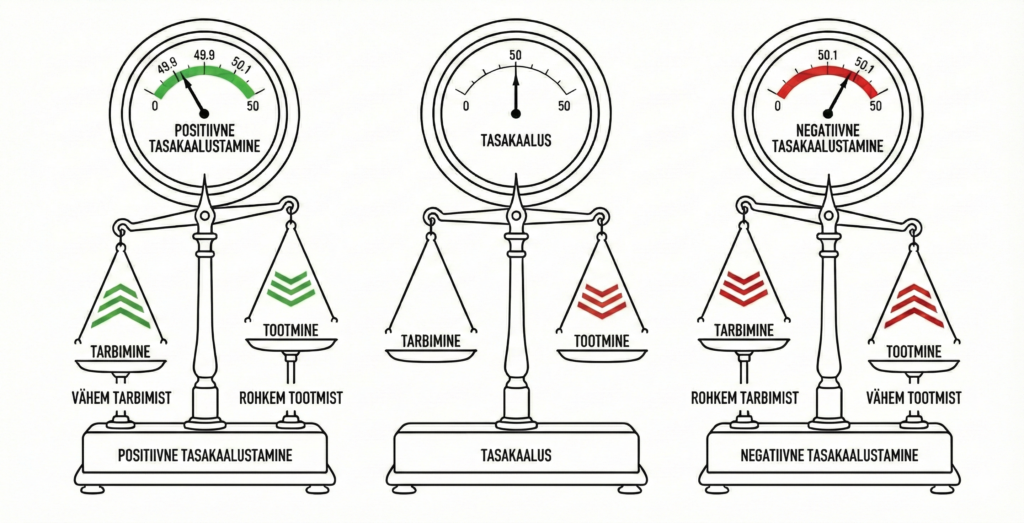
The European and Estonian power grid operates at a frequency of 50 hertz. This is the heartbeat of the system. If this rhythm gets messed up, the consequences are serious.
The power grid has no buffer. This means a harsh reality. Every watt produced must be consumed at the same moment.
Imagine a large weighing scale. On one side are all the operating power plants and on the other side are all the switched on devices. These pans must be perfectly balanced.
Every time a cloud covers a solar park or someone turns on a large factory, the scale tilts. The balance disappears and the frequency starts to change.
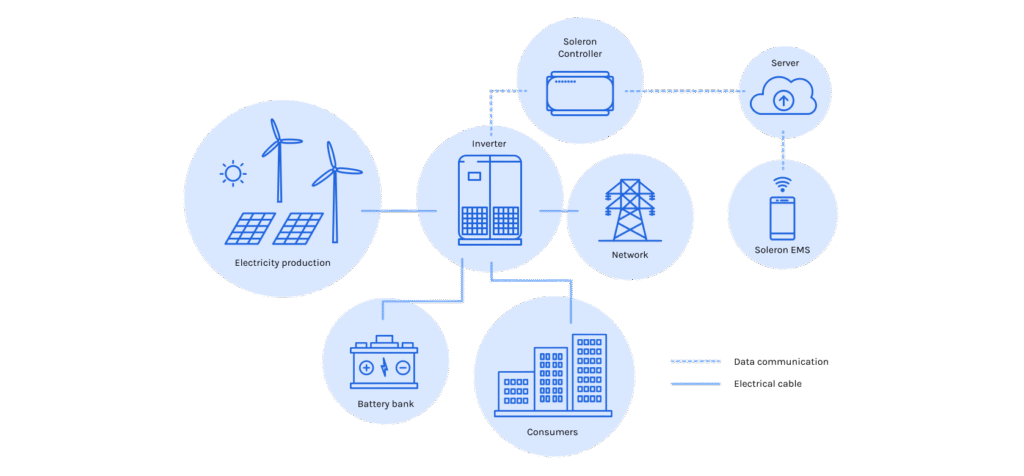
To get the scales back in balance, fast helpers are needed. These helpers are your batteries, controllable solar parks or controllable consumption. Elering pays you to add your contribution to the scale exactly when the system needs it.
This help is bought as three different products. The difference lies only in how quickly you come to the rescue.
1. FCR is the first line of defense
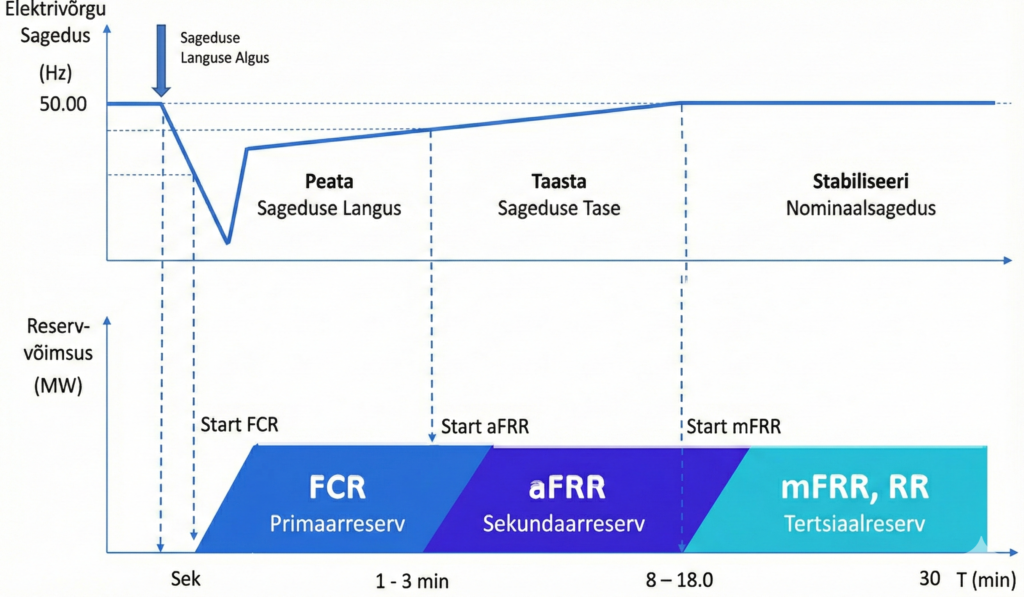
Frequency Containment Reserve or FCR is the most demanding and fastest product on the market. Its task is to stop a sudden drop or rise in frequency during the first seconds after a fault.
-
Reaction speed: Your device must react to a change in frequency in under 30 seconds. In real time, activation often happens in milliseconds.
-
Control: It takes place locally. This means the controller in your plant measures the grid frequency itself and reacts autonomously without waiting for a central command.
-
Suitable assets: Only the fastest succeed here. Primarily batteries and very quickly adjustable loads.
Because the requirements are strict, the compensation here has historically been the highest. You are essentially selling the extreme readiness of your device. You are paid for keeping your device ready to provide upward and downward regulation when needed
2. aFRR acts as the automatic restorer
automatic Frequency Restoration Reserve or aFRR steps in next. Once FCR has stopped the frequency from falling, the system is stable, but the frequency is still incorrect. The task of aFRR is to bring the frequency back to exactly 50.0 Hz and free up the FCR reserves for the next impact.
This is an attractive market for Soleron on sunny and windy days.
-
Reaction speed: Full power must be reached within 5 minutes instead of the previous 2 minutes. This makes participation easier.
-
Control: Central. Elering sends a SCADA signal in real time every few seconds to the controller of your plant, which adjusts the power according to the need.
-
Suitable assets: A wider range of devices fits here. In addition to batteries, biogas plants, cogeneration plants and larger solar parks with smart inverter control are also well suited.
This market offers an excellent balance between technical complexity and the income earned. It is a golden mean for many plants over 100 kW and is also well suited for bringing controllable solar plants to the frequency reserve market.
3. mFRR provides manual control
manual Frequency Restoration Reserve or mFRR is the slowest reserve used for longer-lasting deviations or to release aFRR reserves.
-
Reaction speed: You have 12.5 minutes to reach full load, which is essentially an eternity in the energy sector.
-
Control: Manual or semi-automatic. Elering sends an electronic activation message and the operator or automation has time to set things up.
-
Suitable assets: Slower production units can also participate here, such as gas boiler houses, controllable industrial consumers and older power plants.
Because the technical threshold is low and there are more providers, the prices here in normal situations are also lower than in the automatic FCR and aFRR markets. The exception is periods when the grid is short of energy and the demand for reserves is high.
Which product is right for you?
A simple rule applies here. The faster and more accurate your device is, the higher you rise in the value chain.
By limiting yourself only to the Nord Pool exchange price, you do make money, but you leave a large part of the income on the table. In the mFRR market, you earn additional income, but there you compete with slower and cheaper plants. However, aFRR and FCR take you to the top league. Your devices work automatically and bring maximum revenue for every hour spent in standby mode.
Most solar parks and battery solutions with a capacity of over 100 kW are currently able to move from the mFRR market to the aFRR market. This only requires the right technology and partner.
Soleron has created the necessary software and hardware for this. Our comprehensive control system and SCADA solutions are your ticket to where speed pays off. This is not a complicated undertaking because we offer you a full solution from project preparation to battery integration and enabling market trading. With the current frequency reserve market prices, a realistic payback period for storage is 3 to 5 years, depending on market conditions.
Contact us and let us see which league your plant actually belongs to.